

E-commerce SEO Services
Ecommerce SEO Services
Grow Your Online Store's Traffic and Revenue Through Organic Search
MyTechZoom delivers fully managed ecommerce SEO services for WooCommerce, Shopify, Magento and custom stores. We optimise product pages, category pages and site architecture to drive the high-intent organic traffic that actually buys not just visits.
Client Results Overview
Avg to Page 1
✓ 100% white-hat — Google-compliant ecommerce SEO only
Transparent Pricing
37% of Your Store’s Traffic
Should Be Free from Google
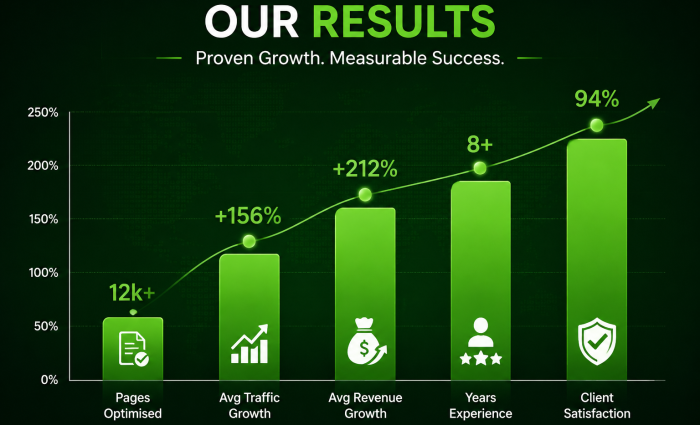
According to Semrush research, organic search accounts for 37.5% of all ecommerce traffic making it the single largest traffic source for most online stores. Yet the majority of ecommerce businesses invest almost entirely in paid ads, leaving a massive, compounding source of free, high-intent traffic completely untapped.The problem is that ecommerce SEO is genuinely complex. A typical online store doesn't have 50 pages it has thousands. Product variants create duplicate content. Faceted filters generate millions of URL combinations. Category pages are ignored. Product descriptions are copied from manufacturers. The result is a store that Google struggles to crawl, understand and trust regardless of how good the products are.MyTechZoom specialises exclusively in ecommerce SEO services for Pakistan, UK and USA markets. We have optimised over 12,000 product and category pages across WooCommerce, Shopify and Magento stores and we know exactly which technical and content fixes deliver the fastest ranking improvements for online retail specifically.
"Organic search drives 33% of overall ecommerce revenue for stores that invest in SEO consistently outperforming every paid channel on a cost-per-acquisition basis over a 12-month horizon."
What We Found & What Needs Protecting
- Page is indexed by Google ✓
- All body text in Title Case ⚠
- Duplicate paragraphs (3 found) ✗
- Zero AEO / structured FAQ content ✗
- URL slug is strong — keep as-is ✓
- No schema markup present ⚠
- No keyword strategy or mapping ✗
- Thin content — under 600 words ✗
What We Do
Eight Pillars of
Ecommerce SEO Services
Ecommerce SEO is not a single service, it is a system of eight interconnected disciplines that all need to work together for your store to rank and convert at its full potential.
01
🔬
The foundation of everything. We audit and fix: crawl errors, duplicate content from faceted navigation, Core Web Vitals failures, XML sitemap issues, robots.txt configuration, structured data errors, canonical tags, hreflang and pagination handling. Most stores have 20–40 unresolved technical issues actively suppressing their rankings.
02
📦
We rewrite product titles, meta descriptions and descriptions to target long-tail buyer-intent keywords. We add Product schema (price, availability, reviews), optimise image alt text, improve internal linking and enhance the content to answer pre-purchase questions that reduce buyer hesitation and improve conversion rates simultaneously.
03
📂
Category pages are your highest-traffic opportunity and most overlooked asset. We add keyword-optimised introductory content, refine H1 and title tags for high-volume commercial keywords, improve internal linking, fix pagination, and add breadcrumb schema. A single well-optimised category page can drive more traffic than 100 product pages combined.
04
🔍
Keyword Research & Mapping
We conduct comprehensive keyword research for every product category, subcategory and product type in your store identifying buyer-intent terms, long-tail product searches, and competitor keyword gaps. Every keyword is mapped to the correct page to prevent cannibalisation and ensure each page targets the highest-value query it can realistically rank for.
05
🏗️
Retargeting Ads
We restructure your store’s navigation hierarchy to ensure Google can crawl every important product and category page efficiently. We build strategic internal link networks that channel page authority to your highest-value pages, reduce crawl depth for products, and create topical clusters that signal deep expertise in your product niche.
06
✍️
Meta Advantage+ Campaigns
We create buying guides, comparison articles, how-to content and FAQs that capture top-of-funnel research traffic and funnel it toward your product pages. This content builds topical authority that improves rankings for your commercial pages too and can earn natural backlinks that further accelerate your domain authority growth.
07
🔗
We build white-hat backlinks directly to your category and product pages not just your homepage. Techniques include digital PR with product data stories, supplier “where to buy” listing placements, comparison and review site citations, and guest posting on relevant industry publications. Direct category page links are the most impactful for ecommerce ranking.
08
📊
Analytics, Tracking & Reporting
We configure GA4 ecommerce tracking to attribute revenue directly to organic search sessions, connect Google Search Console for keyword and crawl monitoring, and set up rank tracking for your primary commercial keywords. Monthly reports connect rankings to revenue not just impressions and clicks so you can see the real ROI of your SEO investment.
09
SEO Cycle

Platform-Specific SEO
Built for Your
Specific Platform
Every ecommerce platform has unique SEO strengths, limitations and common pitfalls. We've worked with all of them — here's how we approach each.
WooCommerce SEO Services
WooCommerce gives more SEO flexibility than any other ecommerce platform but that flexibility means there are more ways to get it wrong. Out of the box, a WooCommerce store often has duplicate content from product variations, unoptimised permalink structures, bloated database queries that slow page loads, and missing schema markup. We fix all of this systematically.
- Yoast SEO / RankMath configuration and schema implementation
- Product variation duplicate content resolution with canonical tags
- WooCommerce permalink and taxonomy structure optimisation
- Plugin audit and removal of speed-killing plugins
- WooCommerce core web vitals improvement
- Shop page, product category and tag page optimisation
- WooCommerce breadcrumb schema implementation
✅ Critical | Product variation URLs creating thousands of duplicate pages
✅ Critical | Shop and category pages with no unique content
✅ Warning | Missing Product schema on product pages
✅ Warning | Core Web Vitals failures from plugin conflicts
✅ Warning | Manufacturer product descriptions causing duplicate content flags
Shopify
SEO Services
Shopify is beginner-friendly but has known SEO limitations that require specific workarounds. The /collections/ and /products/ URL structure creates unavoidable duplicate URLs for products that appear in multiple collections. JavaScript rendering can delay Googlebot’s ability to crawl dynamic content. Shopify’s built-in canonical handling helps but doesn’t solve everything automatically.
- Shopify duplicate URL resolution (collections vs products)
- Shopify speed optimisation — image compression, app audit
- Collection (category) page content optimisation
- Shopify schema markup implementation via metafields
- Shopify blog content strategy for topical authority
- Shopify Markets SEO for international targeting
- Review app schema integration (Judge.me, Loox, Yotpo)
rvices
✅ Critical | Duplicate product URLs across multiple collections
✅ Critical |Slow page speeds from too many third-party apps
✅ Warning | Empty or thin collection (category) pages
✅ Warning | Missing alt text on product images
✅ Warning | No blog or content strategy — pure product focus
Magento SEO Services
Magento (Adobe Commerce) is the most powerful ecommerce platform available — and the most technically complex from an SEO perspective. Its layered navigation system creates an enormous number of filtered URL combinations that can overwhelm Google’s crawl budget if not properly managed. We have extensive Magento SEO experience across both Magento 2 and Adobe Commerce Cloud.
- Magento layered navigation crawl budget management
- Magento canonical URL configuration
- Category and product URL key optimisation
- Magento XML sitemap configuration and submission
- Magento page speed optimisation (Varnish, CDN, FPC)
- Structured data implementation via Magento extensions
- Multi-store and multi-language SEO configuration
✅ Critical | Layered navigation creating millions of duplicate filtered URLs
✅ Critical | Crawl budget exhaustion on large catalogues
✅ Warning | Default Magento title tag format issues
✅ Warning | Slow TTFB and FCP on unoptimised deployments
✅ Warning | Missing hreflang for multi-store setups
Custom & Headless Ecommerce SEO
Headless ecommerce architectures (Next.js + Shopify, React + custom API, etc.) introduce unique SEO challenges around JavaScript rendering, server-side rendering (SSR) vs static generation (SSG), and ensuring Googlebot can access all critical page content. We work directly with your development team to implement SEO at the architecture level — not as an afterthought.
- JavaScript SEO audit and rendering strategy review
- SSR vs SSG recommendation per page type
- Custom structured data implementation
- Headless CMS SEO field configuration (Contentful, Sanity)
- Dynamic sitemap generation and submission
- Custom internal linking and anchor text strategy
- Core Web Vitals optimisation for React/Next.js stores
✅ Critical | Client-side rendering hiding content from Googlebot
✅ Critical | Missing meta tags in dynamic page components
✅ Warning | No structured data in the headless layer
✅ Warning | Sitemap not dynamically updating with new products
✅ Warning | Infinite scroll preventing crawl of paginated products
Our Process
6 Phases from Audit
to
Sustained #1 Rankings
Our ecommerce SEO process is built around protecting what's already working while systematically fixing what isn't then layering on growth strategies that compound over time.
Full Technical SEO Audit
We crawl your entire store with Screaming Frog, Ahrefs and Google Search Console to map every technical issue crawl errors, duplicate content, Core Web Vitals failures, missing or broken schema, canonicalisation problems, robots.txt issues, sitemap errors, and mobile usability problems. This audit identifies every issue that is actively suppressing your existing rankings and forms the roadmap for everything that follows. Provided free for all new clients.
Keyword Research & Page Mapping
We conduct comprehensive keyword research across your full product catalogue identifying the buyer-intent search terms your customers use at every stage of the purchase journey. We map the best keyword to every product and category page, identify pages that are cannibalising each other's rankings, and flag new category and content pages that should be created to capture unclaimed organic traffic your competitors are currently getting.
Technical Fixes & Site Architecture
We implement all technical fixes identified in the audit configuring canonical tags, resolving duplicate content from faceted navigation, submitting corrected XML sitemaps, fixing robots.txt, resolving crawl errors, improving internal linking structure and ensuring Googlebot can efficiently reach every important page in your store. We also restructure your navigation hierarchy to create the clearest possible category architecture for both users and search engines.
On-Page & Content Optimisation
We systematically optimise every product and category page in your store rewriting title tags and meta descriptions to target the right keywords, improving H1 structure, enriching product descriptions with buyer-intent content, adding Product and Review schema markup, optimising image alt text, and adding strategic internal links. Category pages get unique introductory content and subcategory linking structures. This phase typically delivers the fastest visible ranking improvements.
Content Strategy & Authority Building
We create the topical content that elevates your entire store's authority buying guides, product comparison articles, how-to posts and FAQs that answer the research questions buyers ask before purchasing. This content builds topical authority that improves rankings for your commercial pages, earns natural backlinks, and captures top-of-funnel traffic that we convert into category page visitors through strategic internal linking and CTAs.
Monitoring, Reporting & Continuous Optimisation
Monthly reports include: organic traffic from GA4, revenue attributed to organic sessions, keyword ranking positions for all tracked terms, Core Web Vitals status, new crawl errors found, backlinks acquired and domain rating trajectory. We run monthly optimisation cycles rotating focus to underperforming categories, capitalising on new keyword opportunities from Search Console data, and adjusting strategy based on competitor movement. Your rankings are never left unmonitored.
Ranking Protection
How We Make Sure You
Never Lose Page 1
Ranking on page one is only half the challenge. Staying there through Google algorithm updates, competitor activity, and seasonal demand shifts requires a continuous protection strategy.
📡
24/7 Rank Monitoring
We track your keyword rankings daily for all primary commercial terms. Any position drop of 3 places or more triggers an immediate investigation — identifying whether the cause is a Google update, a competitor gaining links, or a technical issue on your site. Early detection means we respond in days, not months.
🔄
Monthly Content Freshness
Google rewards content that is regularly reviewed and updated. Every month we audit your top-ranking pages for content freshness — updating statistics, adding new FAQs, improving product descriptions and refreshing category page introductions. Fresh, accurate content is one of the strongest signals that prevents ranking decay over time.
⚡
Algorithm Update Response
Google runs thousands of algorithm updates per year, with major core updates every 3–4 months. When a core update hits, we immediately analyse your traffic in Search Console and GA4, identify which pages were affected, diagnose the likely cause based on Google’s published guidance, and implement corrective actions before rankings deteriorate further.
🏆
Competitor Intelligence
We monitor your top 5 organic competitors every month — tracking their backlink acquisitions, new content, keyword targeting changes and ranking movements. When a competitor gains significant ground on a keyword you currently own, we proactively strengthen your content and authority on that term before you lose the position.
🛡️
Toxic Link Monitoring
Negative SEO attacks — where competitors point spammy links at your site to trigger a Google penalty — are rare but real. We monitor your backlink profile monthly for unusual link velocity spikes or toxic new referring domains, and submit disavow files to Google Search Console when necessary to neutralise any threats before they affect rankings.
📋
Technical Health Monitoring
A single misconfigured robots.txt, an accidental noindex tag, or a broken redirect can wipe pages from Google’s index overnight. We run weekly automated crawls of your store using Screaming Frog and Search Console monitoring to catch any technical regressions — including issues introduced by theme updates, plugin conflicts, or developer changes — before Google notices them.
Transparent Pricing
Ecommerce SEO Packages.
No Contracts. No Surprises.
All packages include technical audit, keyword research on-page optimisation, schema markup, monthly reporting and continuous monitoring. Scaled by the number of pages we optimise each month..
Starter
Up to 50 pages / month- Full technical SEO audit on signup
- Up to 50 product/category pages optimised
- Keyword research and page mapping
- Title tag, meta description & H1 optimisation
- Product schema markup implementation
- Google Search Console setup & monitoring
- Monthly ranking + traffic report
- Core Web Vitals assessment
Growth
Up to 150 pages / month- Everything in Starter, plus:
- Up to 150 produc/category pages optimised
- Category page content writing included
- 2 buying guides or blog posts per month
- 5 quality backlinks per month
- Competitor keyword gap analysis
- Rank tracking (50 keywords)
- Bi-weekly progress calls
- Algorithm update monitoring & response
Enterprise
Unlimited pages / month- Everything in Growth, plus:
- Unlimited product and category pages
- Dedicated senior ecommerce SEO manager
- 10 quality backlinks per month
- Full AEO strategy (AI search visibility)
- Toxic link monitoring + disavow management
- GA4 ecommerce revenue tracking setup
- Rank tracking (100 keywords)
- Weekly reporting + strategy calls
- CRO (conversion rate) recommendations included
FAQ
Common Questions About Ecommerce SEO
These are the questions every new ecommerce client asks us. We’ve answered them fully and honestly — because choosing an SEO partner for your store is a significant investment and you deserve complete clarity on what you’re getting.
What is ecommerce SEO and how is it different from regular SEO?
Ecommerce SEO optimises online stores to rank for product and category searches queries from people ready to buy, not just learn. Unlike regular SEO, ecommerce stores have thousands of pages, complex technical challenges (faceted navigation, duplicate product variants, inventory-driven URLs) and a commercial intent focus across every page. It requires a different technical approach, different content strategy and a different measurement framework focusing on organic revenue and conversions, not just traffic and impressions.
How long does ecommerce SEO take to show results?
Initial results particularly from fixing technical issues that are suppressing existing rankings can appear within 30–60 days. Category page ranking improvements for medium-competition keywords typically become visible within 3–4 months. Product page rankings for long-tail buyer-intent keywords often move within 6–8 weeks of optimisation. Full authority-driven results compound over 6–12 months. Our clients see an average 156% increase in organic traffic within 6 months of starting a managed campaign.
Which ecommerce platforms do you work with?
We provide ecommerce SEO services for WooCommerce, Shopify, Magento (Adobe Commerce), BigCommerce, PrestaShop and custom or headless ecommerce platforms. Each platform has specific SEO characteristics Shopify's duplicate URL structure, WooCommerce's plugin complexity, Magento's faceted navigation challenges and we approach each with platform-specific solutions rather than a one-size-fits-all template.
What is the most important technical SEO issue for ecommerce stores?
The most common and damaging issue is duplicate content from faceted navigation — when product filters (size, colour, price) generate thousands of near-identical URLs that waste Google's crawl budget and dilute page authority. Other critical issues include out-of-stock product page mishandling, unoptimised category pages, missing Product schema, slow Core Web Vitals, and poor internal linking that leaves valuable product pages three or more clicks from the homepage. Our technical audit identifies and prioritises all of these.
How do you optimise product pages for SEO?
Our product page optimisation covers: unique keyword-rich descriptions targeting buyer-intent long-tail searches; optimised title tags using the format [Product Name] | [Key Feature] | [Brand]; Product schema markup for price, availability, reviews and ratings; image optimisation including alt text, file names and WebP compression; strategic internal linking from category pages and related products; and user-generated content integration (reviews, Q&As) that adds fresh signals. We also ensure each product page answers the top pre-purchase questions buyers search for before committing.
Why are category pages the most important for ecommerce SEO?
Category pages rank for high-volume, high-commercial-intent keywords that product pages cannot. A category page for "men's running shoes" can rank for thousands of variations "best men's running shoes", "men's trail running shoes", "waterproof running shoes for men" simultaneously. Most ecommerce stores either leave category pages blank or fill them with thin boilerplate text. Properly optimised category pages with unique introductory content, strategic H1s and structured internal linking consistently deliver the highest organic traffic and revenue of any page type on an ecommerce site.
How does AI search affect ecommerce SEO in 2026?
Google AI Overviews now appear above traditional organic results for many product and category searches. ChatGPT and Perplexity are increasingly being used for product discovery. Being included in these AI responses requires structured data (Product schema, Review schema, Offer schema) that AI systems can parse; high domain authority built through quality backlinks; content that directly answers specific pre-purchase questions; and E-E-A-T signals that establish your store as a trusted source. Our ecommerce SEO packages include AEO (Answer Engine Optimisation) as standard to ensure visibility in both traditional and AI-powered search simultaneously.
Client Results
Real Ecommerce Stores.
Real Revenue Growth.
Ready to Scale Your Business
with Facebook Ads?
Book a free 30-minute audit call. We'll review your current ads account (or set one up from scratch), show you exactly where your budget could be working harder, and give you a no-obligation strategy recommendation.